.png)


Why We Must Let Ourselves Grieve
- Myra Houser
- Jan 21
- 4 min read


We live in a culture that celebrates resilience and moving forward. "Stay positive." "Keep busy." "Time heals all wounds." While well-intentioned, these messages can leave us feeling pressure to rush past grief rather than through it.
But grief isn't something we can simply outrun. Whether it's the loss of a loved one, the end of a relationship, or the unexpected loss of a job, grief demands to be felt. When we avoid it, we don't eliminate it. We merely postpone it, and in doing so, we create a heavier burden for ourselves down the road.
The Cost of Avoidance
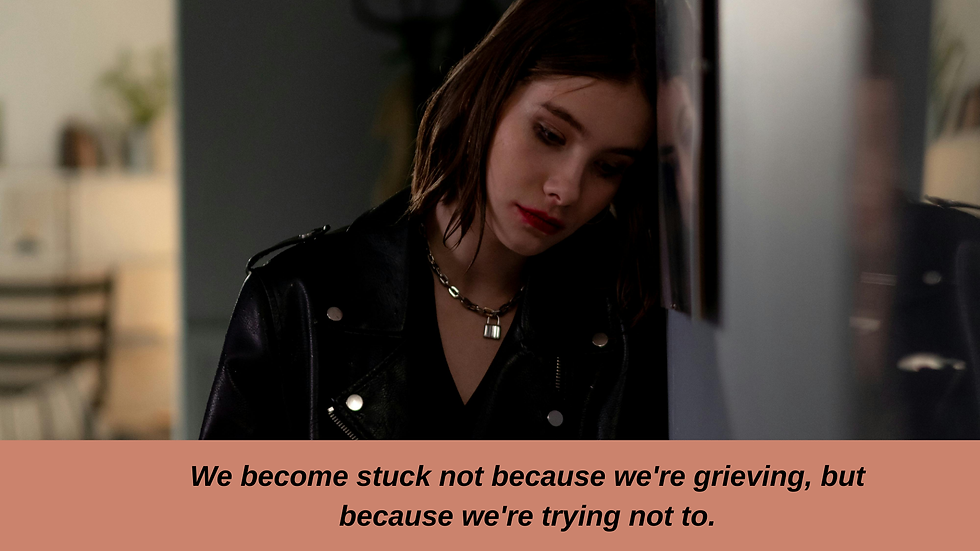
When we suppress grief, we're essentially asking our emotional system to carry weight it wasn't designed to hold indefinitely. The unprocessed feelings don't disappear. They show up as anxiety, irritability, numbness, or physical symptoms. They leak into our relationships and our work. We become stuck not because we're grieving, but because we're trying not to.
Avoidance feels protective in the moment. It's easier to stay busy, distract ourselves, or push feelings down than to sit with the raw ache of loss. But this strategy has an expiration date. Eventually, the grief will find its way to the surface, often at inconvenient times and in ways that feel overwhelming.
Grief Is Not Linear
One of the most challenging aspects of grief is that it doesn't follow a neat timeline. You might feel fine one day and completely undone the next. You might think you've "gotten over it" only to find yourself crying in the grocery store months later.
This isn't a sign that something is wrong with you. It's a sign that grief is doing what it needs to do. Loss changes us, and integrating that change takes time. The process is more like waves than a straight line, and that's entirely normal.
Making Space for What Hurts
So how do we actually allow ourselves to grieve instead of avoiding it?
Name what you've lost. Be specific. It's not just "my job" but the identity it gave you, the daily routine, the colleagues you saw every day. It's not just "the relationship" but the future you imagined, the companionship, the sense of being chosen. Naming the layers of loss helps you understand what you're actually mourning.
Give yourself permission to feel without judgment. Your grief is valid regardless of how others might perceive your loss. You don't need to justify your pain or compare it to anyone else's. If it hurts, it matters.
Create intentional time and space. Set aside moments where you can let the feelings surface without distraction. This might mean journaling, sitting quietly, or talking with a trusted friend. Give your grief room to breathe instead of constantly pushing it away.
Move your body. Grief lives in our bodies as much as our minds. Walking, crying, dancing, or any form of movement can help release what's trapped inside. Physical activity isn't about avoiding feelings but about allowing them to move through you.
Seek support when you need it. You don't have to grieve alone. Whether it's a therapist, a support group, or trusted friends and family, connection can be profoundly healing. Let people show up for you.
Be patient with yourself. Healing isn't linear, and there's no deadline for "getting over it." Some losses we carry forever, and that's okay. The goal isn't to stop feeling but to integrate the loss into who you're becoming.
Honoring What Was by Carrying It Forward
Here's where grief becomes something more than just pain—it becomes a bridge. The people we've lost, the relationships that ended, even the careers that disappeared, all taught us something. They shaped who we are. And one of the most powerful ways to process grief is to identify what we learned and consciously carry it forward.

This isn't about "finding the silver lining" or forcing positivity. It's about honoring what mattered by letting it continue to matter.

Ask yourself: What did this person, relationship, or experience teach me? Maybe your loved one showed you the importance of showing up for others. Perhaps that ended relationship taught you what you truly need in a partner. Maybe losing your job revealed skills you didn't know you had or values you won't compromise again.
Identify the qualities you admired and embody them. If you lost someone who was endlessly generous, look for ways to practice generosity. If a mentor showed you integrity in action, let that become part of how you lead. This isn't imitation, it's integration. You're taking what they offered and making it yours.

Create rituals of remembrance that are active, not passive. Instead of just thinking about what you lost, do something that reflects what you valued. Volunteer for a cause they cared about. Use a skill they taught you. Share their wisdom with someone who needs it. These actions transform grief from something that weighs you down into something that propels you forward.

Let your loss deepen your compassion and presence. Grief cracks us open, and while that's painful, it also makes us more empathetic, more patient with others who are struggling, more aware of what truly matters. Don't waste that hard-won wisdom. Let it inform how you show up in the world.
The Gift on the Other Side
When we allow ourselves to truly grieve and honor what we've learned, something unexpected happens. We don't just survive the loss, we carry forward the best of what was. We become more present, more authentic, more human. Our grief becomes a testament to what mattered.
The pain doesn't have to disappear completely for us to move forward. We simply learn to carry it differently. And in that carrying, we often discover that the love, lessons, and growth we gained don't end just because the relationship, job, or person did.
Your grief deserves to be honored, not hidden. Give it the time and space it needs. And then, when you're ready, let what you learned continue to live through you. That's how we transform loss into legacy.



Comments