.png)


What Science Tells Us About Pets, Pain, and Their Final Moments
- Myra Houser
- Apr 24
- 4 min read


One of the most painful questions grieving pet parents carry after losing a beloved animal companion is this:
“Were they suffering?”
Sometimes that question becomes even heavier if the pet passed away while the owner was not there.
The mind fills the silence with imagined scenes.
Were they scared?
Were they in terrible pain?
Did they feel alone?
These thoughts are incredibly common in grief. Our love for our animals makes us want to protect them from even the smallest discomfort. And when we cannot be certain what their final moments were like, our minds often create the worst possible picture.
But what we know about animal behavior, physiology, and veterinary science often paints a much gentler story.
Animals Experience Pain Differently Than Humans
Animals absolutely feel pain. Veterinarians work hard to recognize and treat it.
But animals do not experience pain in the same way humans do psychologically.
Humans tend to anticipate pain, fear it, and mentally amplify it. We worry about what might happen next. We replay events. We imagine worst-case scenarios.
Animals don’t do this.
They live primarily in the present sensory moment.
When an animal feels discomfort or illness, their response is usually behavioral rather than emotional in the human sense. Instead of worrying or catastrophizing, animals tend to adapt.
Veterinarians frequently observe that animals who are ill will:
sleep more
move less
withdraw to a quiet or comfortable place
conserve energy
become calmer or quieter
These responses are not signs of giving up.
They are natural biological coping mechanisms.

The Body Has Built-In Pain Protection
Another comforting truth from science is that animals — like humans — have natural pain-modulating systems within their bodies.
When injury, illness, or stress occurs, the brain can release chemicals called endorphins. These are the body’s natural opioids.
Endorphins help:
reduce the perception of pain
create a calming effect
sometimes produce mild sedation
This means the body itself often works to dampen pain signals during illness or trauma.
While discomfort can still exist, the nervous system frequently helps soften the experience.
The Quiet State of Illness
Researchers also describe something called “sickness behavior.”
When animals are sick or injured, the immune system signals the brain to shift into a protective mode. This state encourages behaviors that help conserve energy and support healing.
It often looks like:
increased sleep
less movement
reduced appetite
quiet withdrawal
reduced interest in surroundings
This is not the same as emotional suffering.
It is the body slowing down and protecting itself.
Many pet parents remember seeing these signs during their pet’s final days — their pet sleeping more, resting quietly, or becoming less active.
From a biological perspective, this is the body’s natural response to illness.

Animals Are Built to Adapt
Animals evolved in environments where survival depended on adapting quickly to change.
Because of this, they often adjust to discomfort in ways that humans find surprising.
Instead of fighting pain emotionally, animals frequently modify their behavior.
They rest.
They conserve energy.
They seek a comfortable or familiar place.
This doesn’t mean they feel nothing — but it does mean their experience is often quieter and less psychologically layered than what we imagine.
What Happens When Owners Leave
Another concern many grieving pet parents carry is whether their pet felt distressed when they were away.
Research on dogs shows that some animals experience brief stress when their owner first leaves, especially in cases of separation anxiety.
This stress response may include a short rise in stress hormones such as cortisol.
But in many cases, the response is temporary.
After the initial adjustment, many dogs settle into normal behaviors such as:
resting
exploring the environment
sleeping
Dogs, in particular, spend 12 to 16 hours a day sleeping, and illness or aging increases this even more.
So the image many people carry — that their pet was suffering or panicking continuously — often does not match typical animal behavior.
Most animals shift into rest and quiet adaptation.
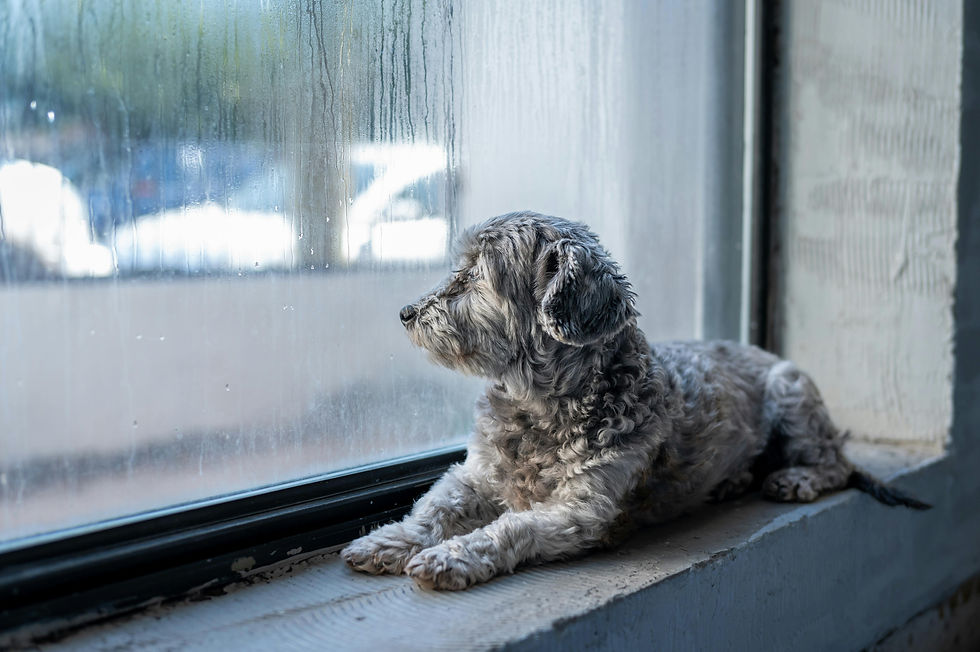
The Comfort of Familiarity
Even when owners are away, animals are surrounded by a world that still feels familiar.
Dogs and cats rely heavily on scent and environmental cues.
Your scent remains on:
furniture
clothing
bedding
the floors of your home
To your pet, the environment still carries the presence of the person they love.
Their world does not suddenly become empty simply because you stepped away.
What Animals Measure Instead
Humans often focus intensely on the final moments of life.
Animals do not measure love that way.
They experience their relationship with us through the thousands of moments that came before:
the meals we served
the walks we shared
the quiet evenings together
the comfort we gave when they were afraid
the safety of the home we created for them
Animals do not judge a relationship by a final hour.
They know it by a lifetime of care.
A Gentle Truth to Carry Forward
When we lose a beloved pet, especially if we were not present at the end, the unknown can be one of the hardest parts of grief. Our minds try to fill the silence with imagined scenes, often assuming the worst.
But what science and veterinary understanding often reveal is something quieter and more compassionate.
Animals are biologically designed to adapt to discomfort, conserve energy during illness, and respond to pain by resting rather than resisting it. As their bodies weaken, many animals naturally move toward stillness — sleeping more, withdrawing to a comfortable place, and allowing their body to slow down.
Their experience is often far calmer than the images our grieving minds create.
And while we may focus intensely on the final moments, animals experience their lives very differently.
They know love through the rhythms of daily life — the meals, the walks, the familiar voice, the safety of home, the thousands of ordinary moments spent together.
Those moments are what shaped their world.
So if your pet passed while you were away, try to hold this gentle possibility close to your heart:
Their final moments may have been quieter and more peaceful than you imagine.
And the life they knew — a life filled with care, safety, and love — is the story that mattered most.
That is the story they carried with them.


Comments